
Lead flashing and valley repair in Dublin
Lead flashing repairs in Dublin typically cost €500 to €1,400 for abutment aprons and bay roofs. Lead valley repairs run €700 to €1,800, rising to €900 to €3,000 to strip adjoining slates and reline a full valley trough in Code 5 milled lead.
Code 4 chimney and abutment aprons, Code 5 valleys and period parapet box gutters dressed properly to prevent fatigue splits.
Free and no obligation. Your request goes to one Dublin roofer, not a list.
- €500–€1,400abutment and bay lead flashing
- €700–€1,800local lead valley repair
- €900–€3,000full valley relining
- Code 4 & 5milled lead specs (BS EN 12588)
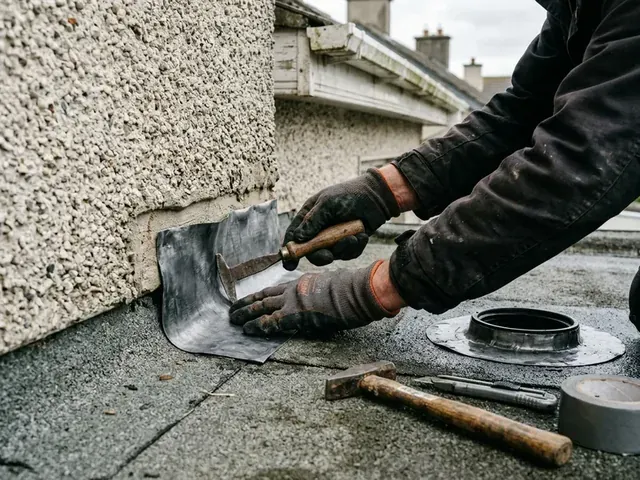
Lead codes explained: why thickness matters
Rolled milled lead is sold by code number (Codes 3 to 8), which corresponds directly to sheet thickness. Using undersized lead or laying sheets longer than 1.5 metres causes thermal expansion fatigue: the sheet buckles in summer heat, creases in winter cold and splits right across the fold.
Code 3
- Thickness
- 1.32 mm
- Correct Dublin roof use
- Soakers tucked cleanly under individual slates at wall or chimney steps only
Code 4
- Thickness
- 1.80 mm
- Correct Dublin roof use
- Chimney aprons, step cover flashings, bay-window aprons and extension wall flashings
Code 5
- Thickness
- 2.24 mm
- Correct Dublin roof use
- Pitched roof valleys, chimney back gutters and smaller parapet box gutters
Code 6 to 8
- Thickness
- 2.65–3.55 mm
- Correct Dublin roof use
- Wide Georgian and Victorian parapet box gutters and flat lead roofs
Price your Dublin roof repair
Three taps and our Dublin guide price appears as you go. Your name and number come last, only if you want one roofer to ring you.
Chimney or lead flashing repair on a semi-detached house (needed this week) in Dublin: €500 to €1,800 typical Dublin guide range.
How the Dublin guide price is worked out
Ranges reflect typical Dublin labour and materials for each fault and house type. Small slate, tile, flat-roof and flashing repairs are normally reached by ladder or tower. Full chimney rebuilds, three-storey period terraces and whole re-roofs can add scaffolding (€1,200 to €2,500). It is a planning guide, not a firm quote: one Dublin roofer inspects the roof and confirms the written figure before any work begins.
Lead valleys and concealed parapet box gutters
On Victorian terraces across Dublin 2, 4, 6, 7, 8 and Dún Laoghaire, double-pitched M-roofs drain into a central valley or a hidden parapet box gutter behind the front brick façade. Because these troughs carry runoff from two full slopes at once, a hairline split in old lead or a leaf blockage at the hopper sends gallons straight through the ceiling below.
- Proper 1.5 m sheet lengths with drips or laps. Keeping sheets within expansion limits stops fatigue cracks returning.
- Sound smooth valley boards and underlay. Laying lead over rough nails or damp timber causes underside corrosion (white carbonate bloom) that eats through the sheet from below.
- Lead-safe sealant and lead wedges in chased mortar joints. Flashing should be chased at least 25 mm into brickwork, wedged mechanically and pointed with lime mortar or neutral-cure lead sealant.
- Patination oil on fresh lead. Applying patination oil straight after fitting stops white chalky staining running down red brickwork and dark slates.
GRP valley troughs vs Code 5 lead valleys
On standard concrete-tiled suburban roofs where the valley is not a conservation requirement, preformed GRP dry-valley troughs offer a clean, lighter alternative that resists theft and requires no mortar fillets. On natural slate roofs, period Dublin terraces and Protected Structures, Code 5 milled lead remains the durable, visually right detail.
Related pages: chimney repair and protected structures in Dublin.
Other roof repairs in Dublin
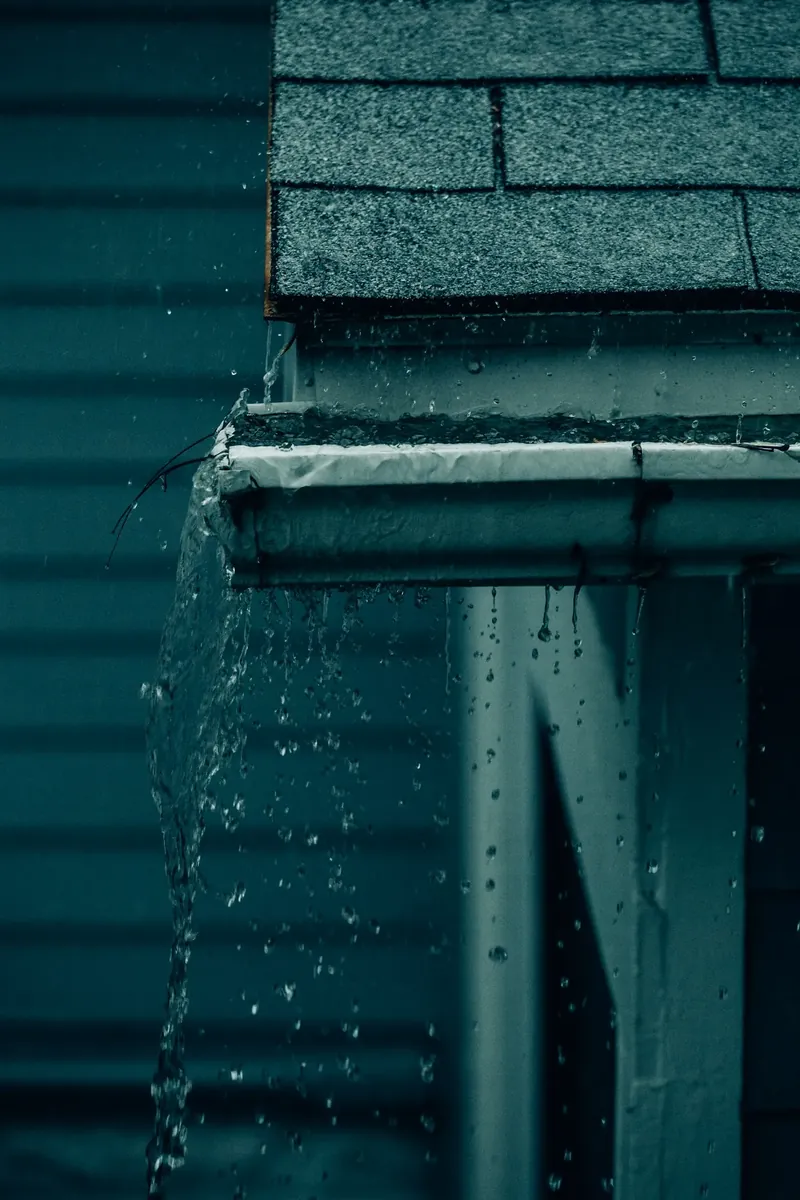 Roof leak repairTracing water from ceiling stain back to entry point and making the roof weather-tight. Typically €300 to €900.
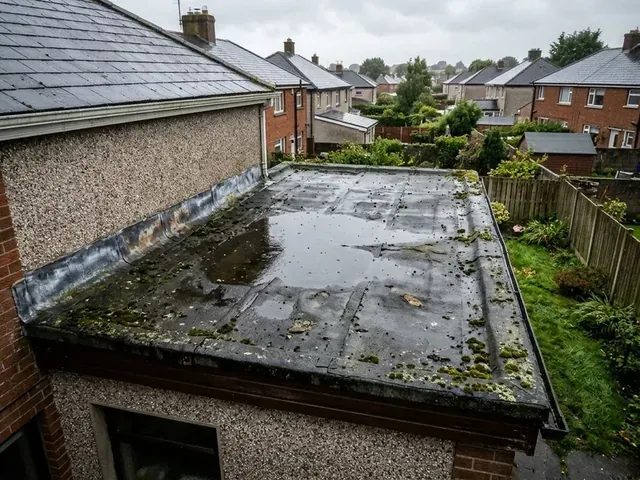 Flat roof repairBlistered torch-on felt, split GRP fibreglass and EPDM seam fixes on extensions and porches. Repairs €250 to €900.
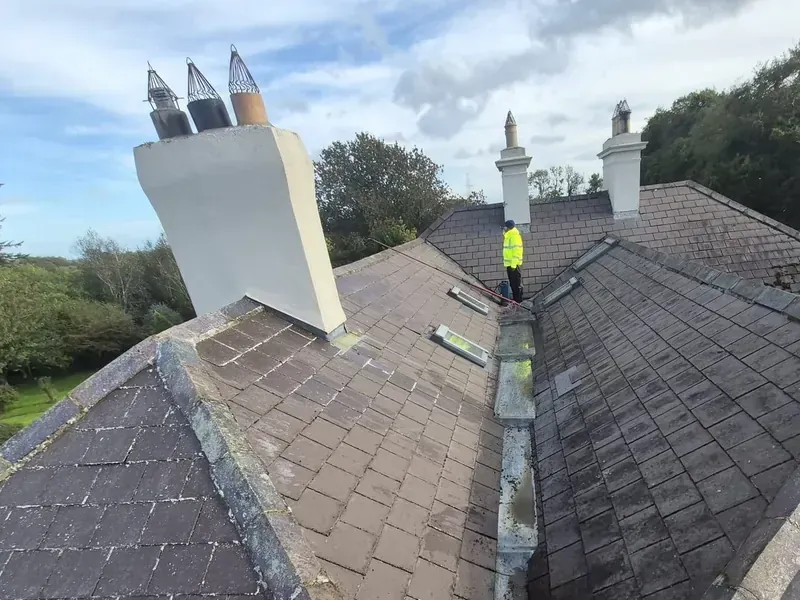 Chimney repairStep and apron lead flashing, mortar repointing, flaunching and pots. Flashing €400 to €1,800.
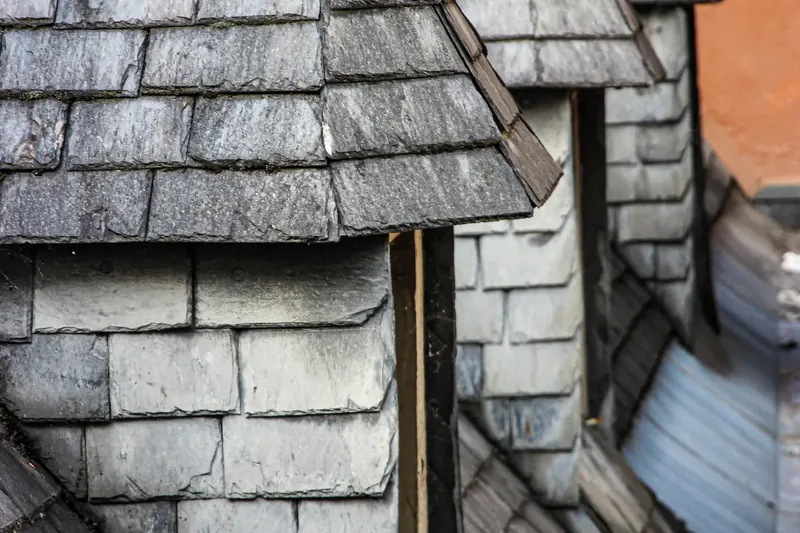 Slate roof repairNatural Bangor Blue, Spanish and fibre-cement slates refixed with copper nails or hooks. From €280.
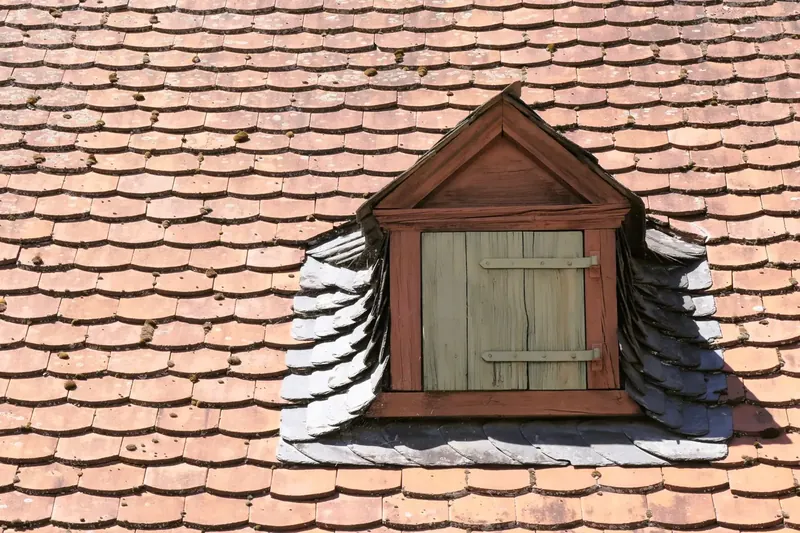 Tiled roof and ridge repairCracked concrete tiles, wind-lifted verge mortar and mechanically fixed dry-ridge upgrades. Ridges €800 to €2,200.
- Skylight and Velux repairFlashing kits, refurbishment and condensation checks (€350 to €1,200)
- Storm damage repairTemporary make-safe (€350 to €950) and insurer reports
- Roofing, fascia and gutteringEaves felt trays, fascia repairs (€300 to €950) and box gutters
- Roof and attic ventilationTile vents (€180 to €380), eaves airflow and condensation cures
- Full roof replacementComplete strip and re-roof in Dublin (€7,500 to €14,000 to €28,000)
Questions homeowners ask
How much does lead valley repair cost in Dublin?
Lead flashing repairs in Dublin typically cost €500 to €1,400 for abutment aprons and bay roofs. Lead valley repairs run €700 to €1,800, rising to €900 to €3,000 to strip adjoining slates and reline a full valley trough in Code 5 milled lead.
Can a split lead valley be welded or patched instead of replaced?
A single puncture on otherwise thick, sound lead can be lead-welded cleanly. Where the valley has multiple fatigue cracks along its length from oversized sheets or underside corrosion, relining in properly lapped Code 5 lengths is the permanent cure.
Why does my new lead flashing leave white streaks down the slates?
Fresh lead forms lead carbonate in early showers unless treated with patination oil on the day it is dressed. The streaks are cosmetic, not a leak, and patination oil prevents them.
Why did mortar pointing fall out of my extension flashing?
Movement between the main house wall and a rear extension cracks rigid sand-and-cement pointing. Wedging the lead securely into a 25 mm chase and pointing with flexible lead sealant or hydraulic lime mortar prevents recurrence.
Everything on this site
Roof repairs in Dublin
Costs and guides
See your Dublin guide price before anyone rings
Three quick taps: what is wrong, what kind of house and how soon you need a roofer. When you want a written price, it goes to a single Dublin roofer.